How to stop tooth sensitivity without fluoride
By Sarah Mitchell, Functional Medicine Practitioner & Weluxia Formulator | 15+ Years in Natural Oral Care
Published: April 2026
Tooth sensitivity without fluoride is not only manageable for many people, removing fluoride and replacing it with the right mineralising ingredients addresses the underlying cause more directly than conventional sensitivity toothpaste ever did. The key is remineralisation: rebuilding the enamel and dentine that leave nerve endings exposed. Ingredients like micro hydroxyapatite, calcium carbonate, and kaolin clay do this naturally, working with your tooth structure rather than coating it in a synthetic fluoride compound.
This guide covers why sensitivity happens, which fluoride-free ingredients actually work, and how to build a complete routine that reduces sensitivity over time.
Why teeth become sensitive
Sensitivity happens when the protective outer layer of your teeth enamel on the crown and cementum on the root becomes thin or damaged. This exposes dentine, a porous tissue containing microscopic channels called dentinal tubules that lead directly to the nerve. When these tubules are open, temperature changes, sweet foods, and acid all trigger pain signals.
Common causes include:
- Enamel erosion from dietary acid (citrus, fizzy drinks, coffee, fermented foods)
- Gum recession exposing the more sensitive root surface
- Aggressive brushing with a hard bristle toothbrush
- Teeth grinding or clenching (bruxism)
- Overuse of whitening products containing hydrogen peroxide
- SLS (sodium lauryl sulphate) in conventional toothpaste, which can irritate oral tissue and worsen sensitivity in some people
- A diet consistently low in calcium, phosphorus, and magnesium
Understanding your specific trigger matters because the solution differs depending on the cause. Sensitivity driven by enamel erosion responds well to remineralising ingredients. Sensitivity linked to gum recession also needs attention to brushing technique and gum tissue health. If your sensitivity is severe, sudden, or accompanied by visible damage, a dental assessment should come first.
What fluoride does for sensitivity and what replaces it
Fluoride reduces sensitivity by forming fluorapatite, a mineral compound that partially fills dentinal tubules and hardens enamel. It works. But it is not the only mechanism available.
Hydroxyapatite the primary mineral that makes up human enamel achieves the same result through a completely biomimetic process. When applied topically as a micro or nano particle formulation, hydroxyapatite physically bonds with the tooth surface and occludes open dentinal tubules, reducing the pain signals responsible for sensitivity. Unlike fluoride, it does not introduce a foreign compound. It deposits the same mineral your teeth are already made of.
Published research comparing hydroxyapatite with fluoride for dentine hypersensitivity consistently shows comparable outcomes. A study in the Journal of Clinical Dentistry found similar reductions in sensitivity scores between hydroxyapatite and fluoride groups over an eight-week period. For those avoiding fluoride whether due to concern about fluorosis, thyroid function, or a preference for clean ingredients — hydroxyapatite is the most evidence-backed alternative available.
For more on how hydroxyapatite works as a remineralising agent, see our full guide: How to Remineralise Teeth: The Science-Backed Guide to Naturally Stronger Enamel.
The best fluoride-free ingredients for sensitive teeth
Micro hydroxyapatite
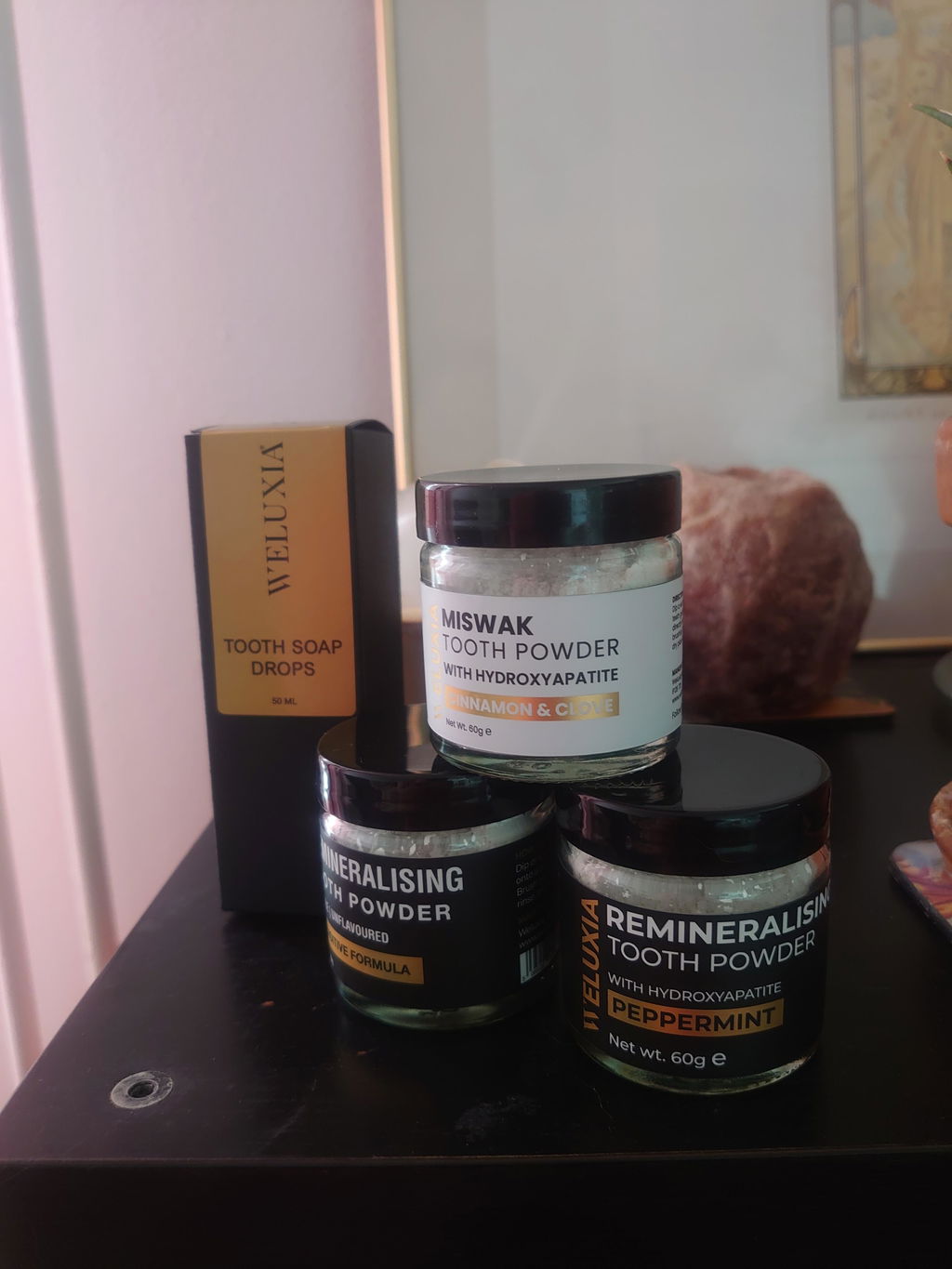
The most clinically supported fluoride-free ingredient for sensitivity. Micro hydroxyapatite particles bond to enamel and dentine, fill and occlude open tubules, and rebuild the mineral matrix of the tooth surface with consistent use. Weluxia's Remineralising Tooth Powder contains marine-derived micro hydroxyapatite sourced from fish scales and Red Sea algae, chosen for its close structural match to natural human enamel.
Calcium carbonate
A gentle, naturally occurring abrasive and mineral source. Calcium carbonate polishes the tooth surface while providing free calcium ions to support remineralisation. It is a foundational ingredient in clean tooth powder formulas and particularly suitable for sensitive teeth due to its low abrasion rating.
Red algae extract (Lithothamnium calcareum)
A marine plant source of calcium and magnesium that supports enamel remineralisation. Lithothamnium calcareum provides a bioavailable mineral complex that works alongside hydroxyapatite to strengthen the enamel matrix over time. It is one of the distinguishing ingredients in the Weluxia remineralising formula.
Kaolin clay
A fine white clay with mild abrasive and gentle detoxifying properties. Kaolin cleans the tooth surface without the scratch risk of higher-abrasion agents, making it ideal for anyone with weakened enamel or exposed dentine. It also has a soothing quality at the gum line.
Sea salt
A natural antibacterial agent that supports gum tissue health. Sea salt reduces the acidic oral environment that drives enamel erosion, and its mineral content contributes trace elements that support the remineralisation process. It has been used in traditional oral care for centuries and remains one of the safest and most effective supporting ingredients.
Xylitol
A naturally derived sugar alcohol that disrupts the bacteria responsible for acid erosion. Xylitol does not feed cavity-causing bacteria the way regular sugar does. Research shows regular use reduces bacterial load in the mouth, which indirectly protects enamel from the acid attacks that cause and worsen sensitivity over time.
How to build a fluoride-free routine for sensitive teeth
Step 1 — Switch to a remineralising tooth powder without SLS
Conventional toothpastes frequently contain sodium lauryl sulphate, a synthetic foaming agent documented to increase oral tissue sensitivity in some individuals. A clean tooth powder formulated around micro hydroxyapatite and calcium carbonate gives you effective cleaning and active remineralisation without any of the synthetic additives that aggravate an already sensitive mouth.
If you are new to tooth powder and are deciding which formula suits your needs, the guide Which Tooth Powder is Right for You walks through the full Weluxia range and the conditions each is formulated for.
Step 2 — Use a soft bristle toothbrush and reduce pressure
Hard and medium bristles are among the most common unacknowledged drivers of sensitivity. Over time they physically abrade the gum line, exposing root dentine. A soft bristle brush — used with the pressure of holding a pen, not scrubbing — immediately reduces mechanical trauma to enamel and gum tissue with every brushing session.
Step 3 — Add oil pulling to your morning routine
Oil pulling with coconut or sesame oil for 10 to 15 minutes before brushing reduces harmful bacterial load in the mouth, draws out debris from gum tissue, and creates an anti-inflammatory environment at the gum line. For sensitivity linked to gum inflammation or early recession, oil pulling is a meaningful addition to any fluoride-free routine. Weluxia has a full introduction to the practice and its evidence base here: What Is Oil Pulling?
Step 4 — Use a copper tongue scraper daily
Bacteria on the tongue continuously recolonise the teeth between brushing sessions. A copper tongue scraper removes this biofilm at source. Copper is naturally antimicrobial, and daily scraping reduces the overall bacterial load in the mouth, protecting enamel and gum tissue from the repeated acid attacks that drive sensitivity over time.
Step 5 — Time your brushing around acidic food and drink
Acidic foods and drinks temporarily soften enamel for up to 30 minutes after consumption. Brushing immediately after acidic intake accelerates enamel loss. Waiting at least 30 minutes or rinsing with plain water immediately after eating or drinking neutralises oral pH before your next brushing session and protects already-sensitive surfaces.
Step 6 — Support remineralisation from within
Topical oral care rebuilds enamel from the outside. But enamel remineralisation is also a systemic process that depends on the minerals available in your bloodstream. A diet adequate in calcium, phosphorus, magnesium, and vitamin K2 provides the raw material for the body's own repair mechanisms. For a deeper look at how this works, see Pearl Powder for Teeth and Enamel: Does It Actually Work?, which explores how systemic mineralisation complements topical oral care.
How long does it take to see results without fluoride?
Most people notice a meaningful reduction in sensitivity within four to eight weeks of consistent use of a remineralising fluoride-free formula used twice daily. Clinical studies on hydroxyapatite for dentine hypersensitivity typically report measurable tubule occlusion within two to four weeks. Results depend on the degree of existing erosion, consistency of use, and whether contributing factors like diet and brushing technique have also been addressed.
Sensitivity that is severe, sudden in onset, or accompanied by visible tooth damage requires professional assessment. A fluoride-free approach can complement clinical treatment, but should not replace it for acute or structural problems.
Is a fluoride-free routine safe long term?
Yes, when the formula contains active remineralising ingredients rather than simply removing fluoride. The distinction matters. A fluoride-free product that replaces fluoride with nothing of mineral value provides cleaning but no protective benefit. A formula built around micro hydroxyapatite, calcium carbonate, and complementary minerals remineralises continuously with every use.
Emerging oral microbiome research suggests that some conventional fluoride toothpastes, particularly those containing SLS and antiseptic agents like triclosan, can disrupt the balance of beneficial bacteria that contribute to gum health and nitric oxide production. A clean, mineral-forward formula supports rather than disrupts this ecosystem.
The full Weluxia remineralisation approach topical powder, systemic mineralisation, and clean routine tools is available as the Remineralisation Kit.
Frequently asked questions
Can tooth sensitivity go away without fluoride?
Yes. Tooth sensitivity can be significantly reduced without fluoride by using ingredients that remineralise enamel and occlude dentinal tubules. Micro and nano hydroxyapatite are the most clinically supported fluoride-free alternatives for this purpose, depositing the same mineral found naturally in enamel. Consistent twice-daily use typically shows measurable improvement within four to eight weeks.
What is the best fluoride-free tooth powder for sensitive teeth?
Look for a formula containing hydroxyapatite as the primary active ingredient, alongside low-abrasion minerals like calcium carbonate or kaolin clay. Avoid sodium lauryl sulphate, which can worsen sensitivity in some individuals. Weluxia's Remineralising Tooth Powder contains marine-derived micro hydroxyapatite alongside red algae extract, calcium carbonate, magnesium carbonate, sea salt, and peppermint oil formulated specifically for sensitive and weakened enamel.
Does hydroxyapatite work as well as fluoride for sensitive teeth?
Published research suggests hydroxyapatite is comparable to fluoride for reducing dentine hypersensitivity. It works by physically occluding open dentinal tubules using the same mineral that makes up enamel a mechanism considered more biomimetic than fluoride, which forms a different compound (fluorapatite). For those avoiding fluoride, hydroxyapatite is currently the strongest evidence-backed alternative.
How do I remineralise teeth naturally?
To remineralise teeth naturally: use a tooth powder containing hydroxyapatite or calcium carbonate twice daily, reduce dietary acid intake, wait at least 30 minutes after eating before brushing, stay well hydrated to support saliva production (the body's own remineralisation system), and ensure your diet provides adequate calcium, phosphorus, magnesium, and vitamin K2. Oil pulling can reduce bacterial load at the gum line and support the oral environment in which remineralisation occurs.
Is tooth powder good for sensitive teeth?
Tooth powder can be excellent for sensitive teeth when it uses a low-abrasion formula. Formulas based on hydroxyapatite, calcium carbonate, and kaolin clay are gentle on weakened enamel while providing active remineralisation. Avoid high-abrasion powders based primarily on baking soda or activated charcoal, which can accelerate enamel wear on already sensitive surfaces. An SLS-free formula is preferable for anyone with existing sensitivity.
Do you wet tooth powder before using it?
You can use tooth powder either wet or dry. The dry method involves dipping a dry toothbrush directly into the powder and brushing as normal. The wet method involves wetting the toothbrush, shaking off excess water, then dipping or sprinkling the powder onto the bristles. Both methods are effective. For sensitive teeth, the wet method can feel gentler on first use.
Related reading
- How to Remineralise Teeth: The Science-Backed Guide to Naturally Stronger Enamel
- Which Tooth Powder is Right for You?
- Pearl Powder for Teeth and Enamel: Does It Actually Work?
- What Is Oil Pulling?
Medical Disclaimer: This article is for educational purposes only and does not constitute dental or medical advice. Weluxia oral care products are not intended to diagnose, treat, cure or prevent any disease. If you are experiencing persistent or severe tooth sensitivity, consult your dentist before making changes to your oral care routine.