Tooth Soap for Sensitive Teeth | Does It Help or Make It Worse?
By the Weluxia Team · Updated April 2026 · 9 min read
Published: March 2026 | Reading Time: 6 minutes
If you have sensitive teeth, switching to any new oral care product feels like a risk. The last thing you want is to make things worse. This article explains honestly whether tooth soap helps with tooth sensitivity, what causes sensitivity in the first place, and who is most likely to benefit from making the switch.
What Causes Tooth Sensitivity?
Before we talk about tooth soap, it helps to understand what is actually causing your sensitivity. There are several common causes and the right oral care solution depends on which one applies to you.
Worn enamel — acid erosion from food, drink, or acid reflux gradually thins the enamel layer, exposing the more sensitive dentin underneath.
Exposed dentin tubules — tiny channels in your dentin lead directly to the nerve. When these are exposed through gum recession or enamel loss, hot, cold, sweet, and acidic foods trigger pain.
SLS sensitivity — sodium lauryl sulphate is the synthetic foaming agent in most conventional toothpastes. Research has linked SLS to increased mouth ulcers, gum irritation, and sensitivity in people who are reactive to it.
Gum recession — when gums pull back from the tooth, the root surface becomes exposed. Root surfaces have no enamel protection and are significantly more sensitive.
Cracked teeth or worn fillings — these require professional dental treatment and no oral care product will resolve them.
Does Tooth Soap Help With Sensitive Teeth?
For sensitivity caused by SLS, the answer is a clear yes. Weluxia tooth soap contains no SLS whatsoever. It cleans entirely through the natural antimicrobial and surfactant properties of saponified olive oil, with no synthetic foaming agents of any kind. Many people who switch to SLS free products report a noticeable reduction in sensitivity within a few weeks.
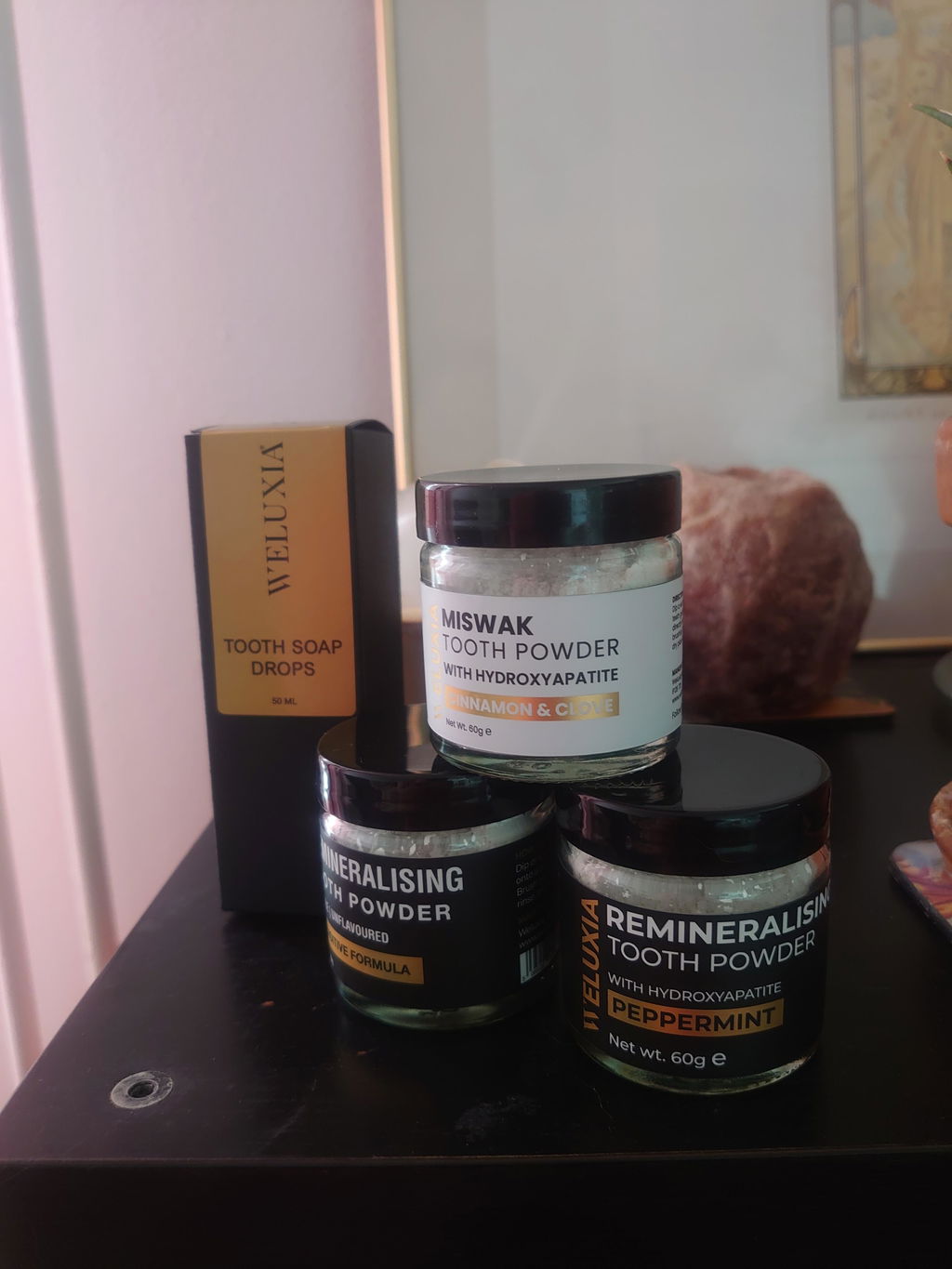
For sensitivity caused by worn enamel or exposed dentin, tooth soap alone is unlikely to be sufficient. Tooth soap cleans gently and supports a healthy oral environment, but it does not actively remineralise enamel or occlude dentin tubules in the way that hydroxyapatite does. If enamel erosion is your primary issue, pairing tooth soap with our remineralising tooth powder would give you significantly better results.
For sensitivity caused by gum recession or cracked teeth, please see your dentist. These are structural issues that require professional assessment.
Why SLS Free Matters for Sensitive Teeth
SLS is in the vast majority of commercial toothpastes because it creates foam, which most people associate with feeling clean. But foam has no cleaning benefit. It is purely cosmetic.
What SLS does do is strip the protective mucous layer from oral tissues, which can leave gums and the soft tissue of your mouth more vulnerable to irritation. A 1999 study published in the Journal of Clinical Periodontology found that SLS free toothpaste significantly reduced the incidence of mouth ulcers in susceptible individuals. If your sensitivity comes with gum irritation or frequent mouth ulcers, SLS is a very likely culprit.
Weluxia tooth soap produces a gentle natural lather from the saponified oils themselves. It cleans thoroughly without stripping your oral tissues.
What Makes Weluxia Tooth Soap Gentle Enough for Sensitive Teeth?
As the formulator behind this product, I can tell you exactly why it is suitable for sensitive teeth.
No SLS or synthetic surfactants — cleaning comes entirely from plant based saponification, not synthetic detergents.
No harsh abrasives — tooth soap drops have extremely low abrasivity because they contain no silica, calcium carbonate, or other physical polishing agents. There is nothing in the formula that will scratch or wear already vulnerable enamel.
No artificial flavours or sweeteners — synthetic flavouring agents are another common sensitivity trigger that our formula avoids entirely.
Organic essential oils only — our peppermint and cinnamon variants use organic essential oils at a concentration that is effective without being irritating to sensitive tissue.
Can Tooth Soap Make Sensitivity Worse?
In most cases no. Because tooth soap is so gentle and free from the common irritants found in conventional toothpaste, it is very unlikely to worsen sensitivity.
The one exception worth mentioning is if you have a specific allergy or intolerance to any of the ingredients, particularly olive oil or cocoa butter derivatives. If you know you react to these, check the full ingredient list before use and do a small patch test inside your lip before committing to daily use.
What to Expect When You Switch
Most people with sensitive teeth who switch to tooth soap notice the following over the first few weeks:
Week 1 to 2 — teeth feel genuinely clean but the absence of foam can feel unfamiliar. This is completely normal and not a sign the product is not working.
Week 2 to 4 — gum irritation and sensitivity often begins to reduce as SLS clears from your routine.
Month 2 onwards — most users report a sustained reduction in sensitivity and improved gum comfort with consistent use.
Results vary depending on the underlying cause of your sensitivity. If you have not noticed any improvement after 6 weeks, it is worth consulting your dentist to rule out structural causes.
Should You Combine Tooth Soap With a Remineralising Product?
If your sensitivity is linked to enamel erosion or thinning, yes. Tooth soap and remineralising tooth powder complement each other very well. Tooth soap handles the cleaning and antibacterial side of your oral routine, while hydroxyapatite tooth powder actively rebuilds and strengthens enamel.
You can use tooth soap for your morning brush and our remineralising tooth powder in the evening, allowing the hydroxyapatite to work overnight when saliva production is lower and minerals have more time to bond to enamel.
The Bottom Line
Tooth soap is a genuinely good option for people with sensitive teeth, particularly those whose sensitivity is triggered or worsened by SLS and synthetic additives in conventional toothpaste. It is gentle, free from common irritants, and low abrasivity makes it safe for daily use even on compromised enamel.
If your sensitivity has a structural cause such as significant enamel erosion, gum recession, or cracked teeth, please see your dentist. Tooth soap supports a healthy oral environment but it is not a substitute for professional dental care.
Ready to try it? Shop Weluxia Tooth Soap here, available in peppermint and cinnamon.
This article was written by Sarah Mitchell, Formulator at Weluxia, based on her direct experience developing the Weluxia tooth soap formula and ingredient knowledge. It is intended for informational purposes only and does not constitute dental advice. Please consult your dentist if you have specific oral health concerns.