Ramadan and Oral Health: Are Miswak Sticks Actually Effective?
By Sarah Mitchell, Functional Medicine Practitioner
Weluxia Formulator | 15+ Years in Natural Oral Care
Published: 28th February 2026 | Reading Time: 6 minutes
Quick Answer: The miswak stick (from the Salvadora persica tree) is genuinely effective during Ramadan. It cleans teeth without breaking your fast, reduces bacteria, and has been endorsed by the World Health Organization as a legitimate oral hygiene tool. Here's exactly what the science says and how to use one correctly.
Why Oral Health Gets Harder During Ramadan
If you fast during Ramadan, you already know the feeling: dry mouth by midday, breath that's harder to manage, and the question of whether brushing with toothpaste actually breaks your fast.
These are real concerns. Fasting reduces saliva flow, and saliva is your mouth's natural defence against bacteria. Less saliva means bacteria multiply faster, plaque builds up more quickly, and bad breath becomes harder to control all without you doing anything wrong.
This is exactly where the natural miswak toothbrush has a centuries-long track record, and where modern science has started to catch up.
What Is a Miswak Stick?
Miswak comes from the roots and branches of the Salvadora persica tree also called the toothbrush tree native to the Middle East, Africa, and South Asia. You chew one end until it forms soft bristles, then use those bristles to clean your teeth.
It contains over 20 naturally occurring compounds including:
- Benzyl isothiocyanate — kills cavity-causing bacteria
- Natural fluoride (10–22 ppm) — strengthens enamel
- Tannins — reduce gum inflammation
- Silica — gentle abrasive that polishes teeth
- Essential oils — freshen breath naturally
Unlike toothpaste, miswak requires no water and produces no foam which is why Islamic scholars have historically considered it permissible during fasting hours.
The Miswak Benefits Backed by Research
This isn't folklore. Over 70 peer-reviewed studies have looked at miswak stick benefits, and the findings are consistent.
1. Reduces Plaque as Effectively as a Toothbrush
A WHO-endorsed 2003 study in the Journal of Periodontology compared miswak and conventional toothbrushes across 480 participants over six weeks. The result: 63% plaque reduction with miswak vs 60% with toothbrushes — no significant difference. Used correctly, a miswak stick cleans as well as what you're already using.
2. Fights the Bacteria That Cause Bad Breath
Bad breath during Ramadan is largely caused by reduced saliva and bacteria producing sulphur compounds. A 2012 study in the Journal of Ayurveda and Integrative Medicine found miswak users had significantly lower levels of these compounds, with 73% preferring miswak over a toothbrush for breath freshness. The benefit lasts longer too — up to four hours — because miswak kills bacteria rather than just masking odour.
3. Supports Gum Health
The oral health benefits of miswak extend to your gums. A 2017 study found it as effective as chlorhexidine the clinical gold standard mouthwash for treating mild gingivitis, with none of the staining or taste side effects. During Ramadan, when dry mouth makes gums more vulnerable, this anti-inflammatory action genuinely matters.
4. Strengthens Enamel
The natural fluoride in Salvadora persica incorporates into enamel and makes it more resistant to acid. A 2015 study measured 23% improvement in enamel hardness after 60 days of miswak use comparable to standard fluoride toothpaste.
Does Miswak Break Your Fast?
This is the question most people actually want answered.
The majority of Islamic scholars including the position of the Hanbali, Shafi'i, and Maliki schools hold that using miswak during fasting hours is permissible, provided nothing is swallowed. This is because miswak contains no water and produces no foam or liquid that could constitute breaking the fast.
The Prophet Muhammad ﷺ specifically recommended miswak use, and scholars draw a distinction between miswak (permitted) and toothpaste (which many consider disliked during fasting hours due to its taste and potential to be swallowed).
Note: Always consult your own scholar or imam if you are uncertain
How to Use a Miswak During Ramadan
Technique matters. Most people who try miswak and find it ineffective are using it incorrectly.
- Peel back 1cm of bark from one end using a knife or your fingernail
- Chew the exposed wood for 30–60 seconds until soft bristles form
- Dampen the bristles lightly with a small amount of water (outside fasting hours) or use dry during the day
- Hold at 45 degrees to your gums — same angle as a toothbrush
- Use short, gentle strokes on each tooth surface outer, inner, and chewing
- Clean your tongue using the back of the stick this removes 80% of odour-causing bacteria
- Rinse the bristles after use and store upright in a dry, ventilated container
Total time needed: 2–3 minutes. Replace the stick: every 2–3 weeks.
Common mistake to avoid: Scrubbing too hard. Let the bristles and the natural compounds do the work.
What Miswak Won't Do
It's worth being honest about limitations:
- It cannot clean between teeth — you still need to floss (at Suhoor or Iftar)
- It won't reverse existing cavities or treat advanced gum disease
- It won't dramatically whiten teeth — expect subtle improvement over 4–6 weeks
- It doesn't replace your dentist
Prefer a More Convenient Option?
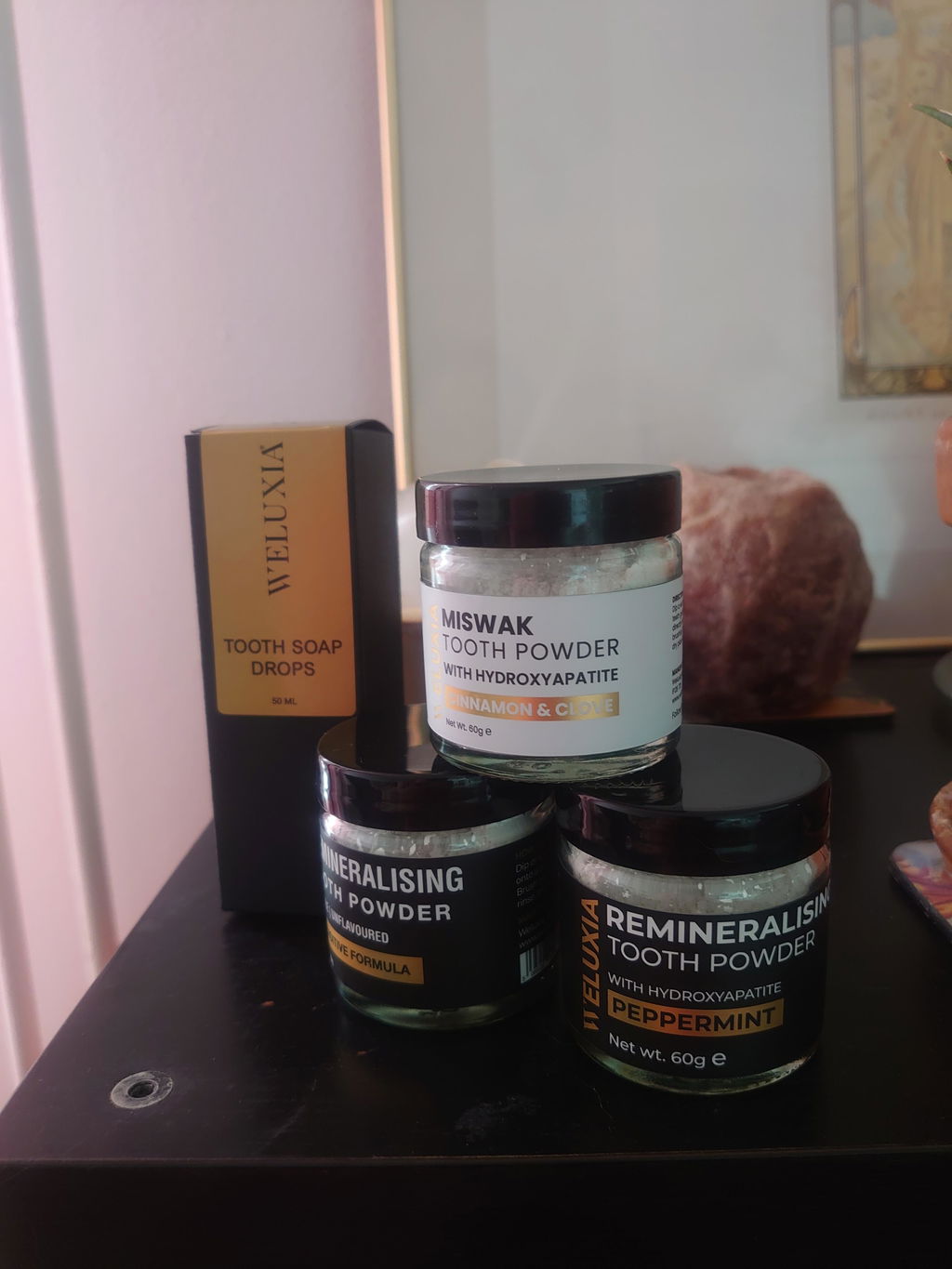
If the technique feels like a barrier, Weluxia Miswak Tooth Powder delivers the same active compounds from Salvadora persica in a form you use with your regular toothbrush. No technique learning curve, the same antibacterial and remineralising benefits, in a glass jar with no plastic waste.
Use it at Suhoor and Iftar for consistent oral health through the whole month.
The Bottom Line
The miswak stick is one of the few oral care tools that is simultaneously backed by modern clinical research, permissible during fasting, and better suited to the dry-mouth conditions of Ramadan than most conventional alternatives.
It reduces plaque, fights bacteria, supports gum health, and freshens breath all without toothpaste, water, or electricity. For anyone fasting this Ramadan, it's worth trying for at least the first week. The science supports it. The tradition endorses it. And in my 15 years of clinical practice, patients who master the technique consistently report cleaner, healthier mouths.
Medical Disclaimer: This article is for educational purposes only and does not constitute dental or medical advice. Consult your dentist before changing your oral care routine, particularly if you have existing dental conditions.