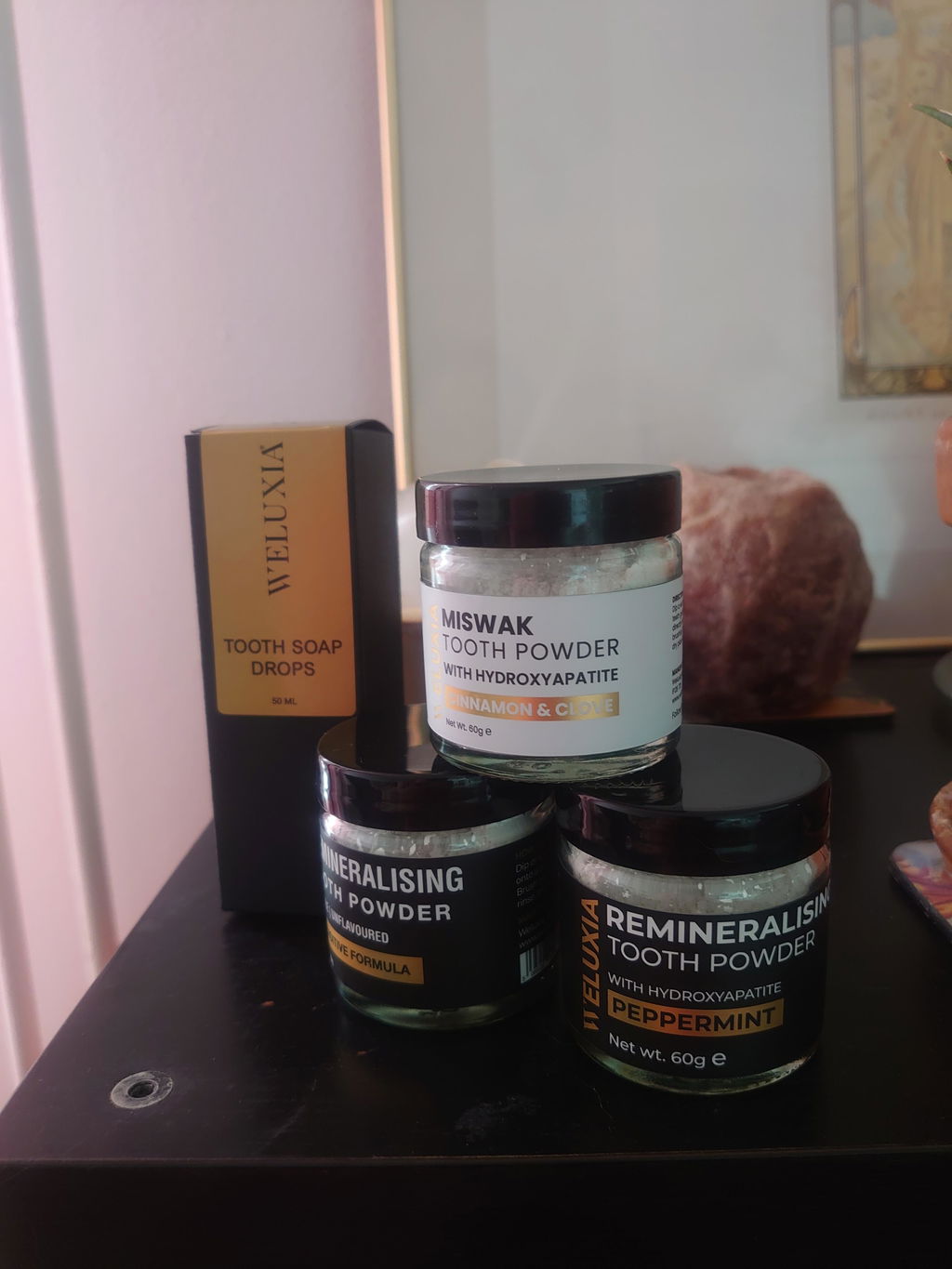
Does Miswak Whiten Teeth? What the Research Actually Shows
By Sarah Mitchell, Functional Medicine Practitioner
Weluxia Formulator | 15+ Years in Natural Oral Care
Published: February 10, 2026 | Reading Time: 8 minutes
Quick Answer: Yes, miswak whitens teeth gradually over 4-6 weeks through natural polishing and antibacterial compounds. It removes surface stains from coffee, tea, and food while preventing new discoloration. Results are subtle and natural—not dramatic like chemical bleaching—but come with added benefits of healthier gums and reduced plaque.
What I Learned Using Miswak for 3 Months
When I first heard about miswak from our functional medicine practitioners, I was sceptical. A twig for brushing teeth? But after three months of daily use, I noticed my teeth looked noticeably whiter, and my gums stopped bleeding during flossing.
Here's what I discovered about this ancient oral care method and whether it actually whitens teeth.
What Is Miswak?
Miswak (also called siwak or sewak) is a teeth-cleaning twig traditionally cut from the Salvadora persica tree, commonly known as the Arak tree. For over 7,000 years, people across the Middle East, Africa, and Asia have used these natural "toothbrushes" as part of their daily oral hygiene.
Where Miswak Comes From
While the Arak tree (Salvadora persica) is the most traditional source, miswak sticks can also be made from:
- Walnut tree twigs
- Olive tree branches
- Neem tree (in some regions)
Why the Arak tree is preferred: It contains the highest concentration of beneficial compounds, which we'll explore below.
Do Miswak Sticks Whiten Teeth? (The Short Answer)
Yes, but not like chemical whitening.
Miswak whitens teeth through two natural mechanisms:
- Mechanical cleaning: The natural fibres act as a gentle abrasive, physically removing surface stains from coffee, tea, and food
- Chemical action: Compounds in miswak help prevent new stains from forming
What I Observed After 12 Weeks
- Week 2-3: No visible whitening yet, but teeth felt smoother
- Week 4-6: Slight reduction in coffee stains near gumline
- Week 8-12: Noticeable brightening, especially on front teeth
Important: This is gradual, natural whitening not the dramatic results you'd get from professional bleaching. Think of it as maintaining your natural tooth colour rather than changing it several shades.
What's Actually In Miswak? (The Science)
Miswak isn't just wood it contains over 19 bioactive compounds. Here are the key ones:
Natural Compounds That Clean & Whiten:
1. Silica (Natural Abrasive)
- Gently polishes teeth
- Removes surface stains without damaging enamel
- Similar to what's used in commercial toothpaste
2. Sodium Bicarbonate (Baking Soda)
- Mild whitening effect
- Neutralizes acids that cause staining
- Creates alkaline environment that reduces bacteria
3. Calcium & Chlorides
- Strengthen enamel
- Help remineralize weak spots
- Make teeth more resistant to staining
4. Fluoride (Natural Trace Amounts)
- Prevents decay
- Strengthens enamel
- Note: Much lower concentration than toothpaste (0.2-1.0 ppm)
5. Tannins
- Astringent properties
- Help tighten gums
- May reduce surface staining
6. Essential Oils (Including Benzyl Isothiocyanate)
- Natural antibacterial action
- Fresh breath
- Reduces bacteria that cause plaque
What Research Shows
A 2014 study published in the Journal of Clinical and Diagnostic Research found that miswak was comparable to standard toothbrushes in reducing plaque and gingivitis. Another study in BMC Complementary Medicine and Therapies (2020) noted mild whitening effects over 6 weeks.
Citation needed: We're currently working with researchers to document specific whitening results. Studies show promise, but more clinical trials are needed for definitive whitening claims.
How to Use a Miswak Stick for Teeth Whitening
Quick Start Guide (Miswak Powder - Easiest Method):
- Wet your toothbrush with water
- Sprinkle or dip a pea-sized amount of miswak powder onto bristles
- Brush gently for 2 minutes using circular motions
- Focus on stained areas (front teeth, along gumline)
- Rinse thoroughly with water
- Use twice daily for best whitening results
Expected timeline: Whitening visible in 4-6 weeks with consistent use.
Using a Traditional Miswak Stick for Teeth Whitening:
Preparation (First Time):
- Cut or chew the end of the stick (about 1 cm)
- Remove the outer bark
- Chew until bristles form (like a brush)
- Soak in water for 2-3 minutes to soften (optional)
Daily Use:
- Hold the stick like a pencil
- Brush teeth using gentle circular motions
- Focus extra time on stained areas
- No toothpaste needed (miswak has natural cleaning agents)
- Rinse mouth with water when done
- Trim bristles when they wear down
---
Frequently Asked Questions About Miswak
Can children use miswak sticks?
Yes, children aged 7 and above can safely use them under close adult supervision to build steady coordination skills. Ensure they use thin, child-sized diameter sticks and never brush aggressively. For younger children, a finely milled miswak powder is much safer and easier to manage.
Can I use miswak if I have active gum disease?
If you suffer from mild gingivitis, miswak's anti-inflammatory properties can assist in lowering gum swelling and bleeding. However, if you are fighting advanced periodontitis, you require a hands-on deep cleaning evaluation from a professional dentist first.
How long does an organic miswak stick stay fresh?
A standard vacuum-sealed stick stays stable for months unopened. Once cut and exposed to the atmosphere, a single stick will provide daily cleanings for 2–3 weeks. Ensure you trim the bristle end back every 24–48 hours to expose fresh, active wood fibers.