Pearl Powder Benefits
By Sarah Mitchell, Functional Medicine Practitioner
Weluxia Formulator | 15+ Years in Natural Oral Care
Published: 15 April 2026 · Reading Time: 8 min
Quick Answer: Pearl powder is ground from real pearl — saltwater or freshwater — and contains calcium carbonate, conchiolin protein and 18 amino acids. Its most well-documented benefits include enamel support and remineralisation, skin brightening, and antioxidant activity. The key to bioavailability is how finely it has been milled: quality matters more than quantity.
Pearl powder has been used in traditional Chinese medicine and Ayurvedic practice for over a thousand years. For much of that time, it sat on the fringes of Western wellness — interesting, but not taken particularly seriously.
That is changing. Researchers are now studying the compounds inside pearl in meaningful detail, and what they are finding aligns closely with what traditional practitioners have long observed. This article covers what the science actually says, which benefits are best supported by evidence, and what to look for if you are considering adding pearl powder to your routine.
pearl powder benefits for teeth, skin and overall health
What Is Pearl Powder Made Of?
Pearl powder is produced by grinding whole pearls — typically freshwater or saltwater — into a fine white or off-white powder. The composition of pearl is remarkably consistent across species and source:
- Calcium carbonate (aragonite form): Makes up approximately 82–86% of pearl by weight. Aragonite is a highly stable crystalline form of calcium that closely mirrors the mineral structure of human enamel.
- Conchiolin protein: An organic matrix protein that binds the calcium carbonate layers together. It is structurally similar to keratin and plays a key role in the lustre and resilience of pearl.
- 18 amino acids: Including glycine, alanine, and aspartic acid — all of which are involved in collagen synthesis and tissue repair in the body.
- Trace minerals: Including magnesium, zinc, iron and selenium — present in small but meaningful concentrations.
- Taurine and other bioactive compounds: Found particularly in saltwater pearl, with antioxidant and anti-inflammatory properties.
The quality of these compounds — and how available they are to the body — depends heavily on particle size. Pearl that has been levigated (water-milled to a near-nano particle size of 1–2 microns) is far more bioavailable than standard ground pearl powder. This is why processing method matters as much as source.
Key Health Benefits of Pearl Powder
Across traditional use and modern research, pearl powder's health benefits fall into three well-documented areas: structural support for teeth and bones, skin health, and systemic antioxidant activity. Here is a clear summary of what the evidence supports:
- Enamel Remineralisation: Aragonite calcium carbonate replenishes minerals lost through acid erosion, supporting enamel hardness over time.
- Skin Brightening: Inhibits tyrosinase activity to reduce melanin production, helping even skin tone and reduce dark spots.
- Collagen Support: 18 amino acids including glycine and proline provide the building blocks the body uses to produce collagen.
- Antioxidant Activity: Marine-derived compounds including taurine and SOD activity help neutralise free radicals linked to ageing.
- Oral pH Balance: Alkaline calcium carbonate neutralises mouth acids that cause bacterial growth and enamel erosion.
- Calm and Sleep Support: Glycine content has emerging evidence for supporting sleep onset and nervous system regulation when taken internally.
Teeth and Skin Benefits: What Pearl Powder Does
Benefits for Teeth and Enamel
This is the area where the evidence is most directly relevant to Weluxia's formulation, and where pearl powder shows some of its most interesting properties.
Remineralisation: Enamel cannot regenerate on its own — once it is gone, the body cannot replace it. What it can do is remineralise: replenish the calcium and phosphate lost through acid erosion. Pearl powder's calcium carbonate, in its aragonite form, provides a bioavailable source of calcium that can participate in this process when applied topically.
Natural mild abrasion: Pearl powder has a Mohs hardness of approximately 3–3.5, which makes it gentle enough to use daily without damaging enamel. It provides the mild mechanical polishing action needed to lift surface stains while remaining well within safe RDA (Relative Dentine Abrasivity) limits.
Alkalising effect: Calcium carbonate is alkaline by nature. Used in a tooth powder, it helps neutralise the acids produced by oral bacteria — the same acids responsible for demineralisation and enamel erosion. This supports a healthier oral pH environment over time.
"Pearl's aragonite calcium carbonate is structurally similar to the hydroxyapatite in human enamel — which is what makes it such a logical choice for remineralisation support."
Benefits for Skin
Brightening and evening skin tone: Pearl powder has a long history of use as a skin brightening agent in traditional Chinese skincare. Modern research has identified a likely mechanism: the inhibition of tyrosinase, an enzyme involved in melanin production. By interfering with this pathway, pearl powder may help reduce the appearance of dark spots and uneven pigmentation over time.
Collagen support: The amino acids in pearl powder — particularly glycine, proline and hydroxyproline — are the same building blocks the body uses to synthesise collagen. Whether taken internally or applied topically, there is a reasonable scientific basis for pearl powder's reputation as a skin-supporting ingredient.
Antioxidant activity: Several studies have identified antioxidant compounds in pearl extract, including superoxide dismutase (SOD) activity. Antioxidants help neutralise free radicals that contribute to skin ageing — and saltwater pearl in particular shows notable activity due to its higher concentration of taurine and other marine-derived compounds.
Usage in Oral Care: How Pearl Powder Is Used for Teeth
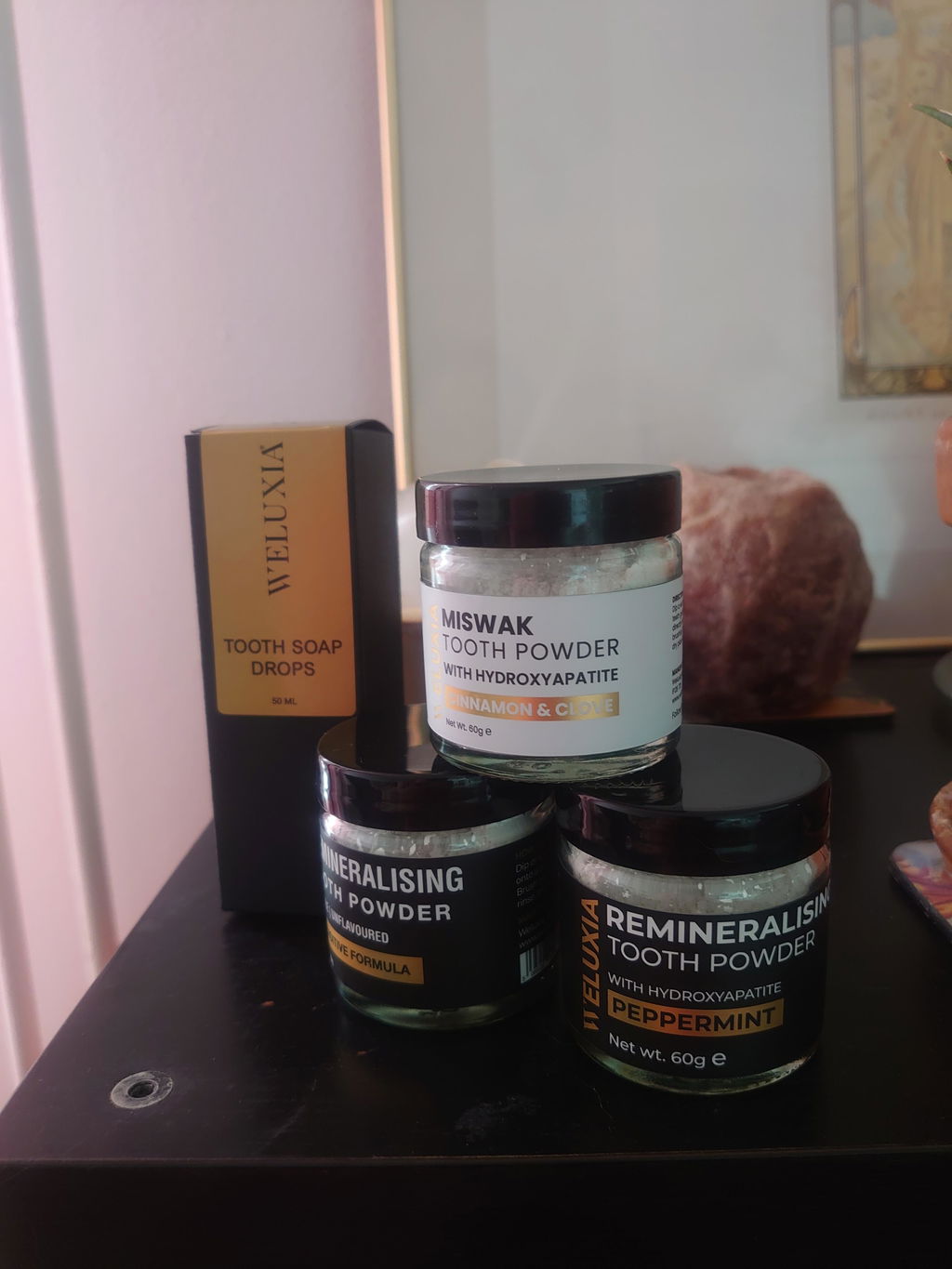
In oral care, pearl powder is used primarily as a remineralising and polishing agent in tooth powder formulations. Unlike conventional toothpaste, tooth powder allows direct, concentrated contact between pearl's active compounds and the enamel surface — with no diluting gel base or foaming agents getting in the way.
What it does in the mouth: The fine calcium carbonate particles provide gentle mechanical polishing to lift surface stains. Simultaneously, the aragonite mineral deposits onto the enamel surface, supporting the natural remineralisation process. The alkaline pH it creates discourages the acid-producing bacteria responsible for decay.
Why tooth powder outperforms supplements for oral health: Taking pearl powder internally does provide calcium systemically, but the enamel benefits come specifically from topical contact. Direct application via tooth powder means the active compounds are delivered exactly where they are needed.
Usage in Skincare: How Pearl Powder Is Applied Topically
In skincare, pearl powder is used in serums, masks, and loose powder formulations. Its primary roles are brightening, antioxidant protection, and texture refinement.
Face masks: Pearl powder mixed with a carrier such as aloe vera gel, rose water or honey creates a brightening mask that can be left on for 10–15 minutes before rinsing. This is one of the most traditional methods of application and remains popular in Korean and Chinese beauty routines.
Mixed into moisturiser: A small amount of finely milled pearl powder can be stirred into your regular moisturiser or serum. The key is using levigated pearl — coarser grades will feel gritty and will not absorb effectively.
As a setting powder: Very finely milled pearl powder has a natural iridescent quality that can be used as a light-reflecting setting powder. This dual cosmetic and active function is one of the reasons it has been used in beauty for centuries.
Consistency matters: As with most actives, brightening and collagen-support benefits build gradually. Most people report visible improvement in skin clarity and texture after four to eight weeks of consistent use.
Pearl Powder Side Effects and Safety
Pearl powder has a strong safety profile when sourced and processed correctly. It has been used in food, medicine and cosmetics for centuries without significant documented adverse effects. That said, there are a few important considerations:
- Heavy metal contamination: Pearls absorb minerals from their environment, which means low-quality pearl powder can contain elevated levels of lead, arsenic or cadmium. Always choose brands that provide third-party heavy metal testing — this is the most important safety factor.
- Shellfish allergy: Pearl is produced by molluscs. People with a shellfish or mollusc allergy should consult a doctor before using pearl powder internally or topically, as cross-reactivity is possible.
- Calcium intake: If taking pearl powder internally alongside other calcium supplements, be mindful of total daily calcium intake. Excessive calcium supplementation can cause digestive discomfort in some people.
- Skin sensitivity: Topically, pearl powder is generally very well tolerated. As with any new skincare ingredient, a patch test on the inner wrist before full facial use is always advisable.
- Pregnancy and breastfeeding: There is no documented evidence of harm, but as with all supplements, it is advisable to check with a healthcare professional before use during pregnancy or breastfeeding.
- Particle size and abrasion: For oral use, overly coarse pearl powder could theoretically be too abrasive for sensitive enamel. Levigated pearl powder at 1–2 microns presents no such concern — its RDA (Relative Dentine Abrasivity) is well within safe limits.
For the vast majority of people, pearl powder used topically in oral care or skincare is safe for daily use. Internal supplementation is also well tolerated in typical doses. The primary due diligence is sourcing — quality control and third-party testing are non-negotiable.
How to Use Pearl Powder for Teeth
For oral care specifically, the most effective approach is direct topical application — which is why pearl tooth powder outperforms pearl supplements when the goal is enamel support.
- Dampen your toothbrush — a bamboo brush with medium or soft bristles works well.
- Dip lightly into the tooth powder — a small amount is sufficient. Pearl powder is concentrated.
- Brush for two minutes — using gentle circular motions, covering all surfaces.
- Spit and rinse — no need to rinse aggressively; a light rinse allows the calcium to remain in contact with enamel for longer.
- Use consistently — remineralisation is a gradual process. Results build over weeks and months of regular use.
Saltwater vs Freshwater Pearl Powder: Does It Matter?
The short answer is yes — though both have genuine value.
Saltwater pearl (Akoya, South Sea or Tahitian) tends to have a higher concentration of conchiolin protein and marine-derived bioactive compounds. It is slower-growing, more densely layered, and generally considered the premium option for oral and skin applications.
Freshwater pearl is more widely available, more affordable, and still contains the core active compounds — calcium carbonate, amino acids, and conchiolin. For most applications, a high-quality freshwater pearl powder that has been properly levigated will outperform a lower-grade saltwater product.
The processing method — specifically levigation to near-nano particle size — has a greater impact on efficacy than source alone.
What to Look for When Buying Pearl Powder
- Particle size: The finer the better. Look for levigated pearl or products that specify micron particle size. Coarse pearl powder has significantly lower bioavailability.
- Source transparency: Reputable brands will specify whether the pearl is freshwater or saltwater, and where it comes from.
- Third-party testing: Heavy metal testing is important for any pearl product, as pearls accumulate minerals from their environment.
- Processing method: Traditional levigation (water-milling) is preferable to standard grinding, which can degrade heat-sensitive proteins including conchiolin.
- No unnecessary additives: Pearl tooth powder should not require synthetic binders, artificial flavours or preservatives.
The Bottom Line
Pearl powder is not a wellness trend built on nothing. Its active compounds — calcium carbonate in aragonite form, conchiolin protein, and a full spectrum of amino acids — have genuine biological activity, and the evidence for oral and skin applications is the strongest. The most important variable is quality: levigation, source transparency and third-party testing separate products that work from those that do not. Used consistently as part of a clean oral care routine, pearl powder is one of the more interesting remineralising ingredients available without synthetic additives.
Related Reading:
Pearl Powder Teeth Guide
Saltwater vs Freshwater Pearl Powder: What's the Difference
This article is for informational purposes only and does not constitute medical or dental advice. Pearl powder is a natural ingredient and is not intended to diagnose, treat, cure or prevent any disease or dental condition. If you have concerns about your oral or general health, please consult a qualified healthcare professional. Individual results may vary.