Remineralising Tooth Powder for Cavities: What It Does, What It Cannot Do, and How to Use It
If you have been searching for a natural alternative to conventional toothpaste and want to actively support your enamel health, you have probably come across remineralising tooth powder. But with so many options available and a lot of conflicting information online, it is not always clear what these powders can realistically do for your teeth, particularly when it comes to cavities.
This guide covers everything you need to know: how remineralisation works, which ingredients actually make a difference, how to choose the best tooth powder for cavities, and where it fits within a complete daily oral care routine.
Does Tooth Powder Work for Cavities?
The short answer is: it depends on the stage of the cavity.
Tooth decay is not an event. It is a process that unfolds in stages. In the very earliest stage, known as initial enamel demineralisation, the surface of the tooth loses minerals but has not yet broken down structurally. At this stage, remineralisation is entirely possible. The body can redeposit calcium and phosphate ions back into the enamel, and a well formulated tooth powder can actively support that process.
Once a cavity has progressed beyond the enamel into the softer dentine layer beneath, or deeper still into the pulp, the structural integrity of the tooth has been compromised in a way that mineralising ingredients cannot reverse. At that point, professional dental treatment is necessary.
So tooth powder does not cure cavities. What a high quality remineralising tooth powder can do is strengthen enamel, create an oral environment less hospitable to decay causing bacteria, and support the natural repair of very early surface damage. Used consistently as part of a thorough daily routine, that is genuinely meaningful for long term oral health.
What Is Remineralisation and Why Does It Matter?
Your enamel is not a static structure. Every day, it is involved in a constant cycle of mineral loss and mineral gain.
When you eat or drink, particularly anything sugary or acidic, bacteria in the mouth produce acids as a by product of digesting those foods. Those acids temporarily lower the pH in your mouth and draw minerals, primarily calcium and phosphate, out of the enamel. This is called demineralisation. Between meals, as your saliva buffers the acid and pH rises again, those minerals can be redeposited. This is remineralisation.
When demineralisation consistently outpaces remineralisation, enamel weakens over time. White spot lesions, increased sensitivity, and eventually structural cavities are the result. The goal of a remineralising oral care routine is to tip that balance back in favour of strength by reducing the acid load and actively supplying the minerals enamel needs to rebuild.
This is the science that remineralising tooth powders are built on. The best formulations supply those minerals directly at the tooth surface with every brush.
The Key Ingredients to Look For in a Remineralising Tooth Powder
Not all tooth powders are formulated equally. The ingredient list is where quality shows. Here are the minerals and actives that have genuine evidence behind them.
Hydroxyapatite
Hydroxyapatite is the mineral that makes up approximately 97% of tooth enamel. In nano or microcrystalline form, it can integrate directly into the enamel surface, filling in microscopic lesions and restoring the smooth mineral lattice of healthy teeth. A number of clinical studies have found it comparable to fluoride in its ability to prevent cavities and reduce sensitivity, making it a compelling fluoride free option for those who prefer to avoid it. Weluxia's Remineralising Tooth Powder uses hydroxyapatite as a core active ingredient for exactly this reason.
Calcium Carbonate
Calcium carbonate is a naturally derived mineral that serves a dual function in tooth powder. It acts as a gentle abrasive, helping to lift surface stains and plaque without damaging enamel, while also contributing calcium ions that support the remineralisation process. It is one of the most well established ingredients in natural oral care.
Xylitol
Xylitol is a naturally occurring sugar alcohol found in birch bark and many fruits and vegetables. It does not feed the bacteria responsible for tooth decay. In fact, the primary decay causing bacterium, Streptococcus mutans, absorbs xylitol but cannot metabolise it, which over time reduces its population in the mouth. Xylitol also stimulates saliva flow, which is itself one of the most important natural defences against cavities. Look for it in the first half of a tooth powder's ingredient list for meaningful concentration.
Kaolin Clay
Kaolin is a fine white clay used in many natural tooth powders as a gentle polishing agent. It has a very low abrasivity score, making it safe for daily use. It helps remove plaque and biofilm without scratching enamel, leaving a clean surface for remineralising minerals to adhere to.
Baking Soda (Sodium Bicarbonate)
Baking soda neutralises the acids in the mouth that drive demineralisation. By raising the pH of the oral environment after eating, it creates conditions far more favourable to remineralisation. It also provides mild abrasive cleaning action and has been shown in clinical research to reduce plaque more effectively than many conventional toothpastes.
Why Don't Dentists Recommend Hydroxyapatite?
This is a fair question, and it largely comes down to timing and geography rather than evidence.
Fluoride has decades of clinical data behind it and has been the dominant recommendation in mainstream dentistry since the mid 20th century. It works by converting some of the enamel's natural hydroxyapatite into a slightly harder compound called fluorapatite, which is more resistant to acid. It is well understood, well studied, and widely available.
Hydroxyapatite is newer to Western dental literature as an alternative rather than a supplement. It has been the standard in Japanese dentistry for over 40 years, where it is approved as an active ingredient for cavity prevention, and a growing body of peer reviewed research published over the last decade is confirming its efficacy. A 2019 randomised controlled trial published in the Journal of Dentistry found nano hydroxyapatite toothpaste comparable to 1450 ppm fluoride for cavity prevention in adults.
As that research body grows, attitudes in UK and European dentistry are shifting. More progressive practitioners, particularly those working in biological or holistic dentistry, are now recommending hydroxyapatite routinely. For those who prefer to avoid fluoride, whether due to sensitivity, personal preference, or concern about systemic exposure, hydroxyapatite offers a credible, evidence backed alternative.
How Can I Remineralise a Cavity?
Supporting enamel remineralisation is not about one single product. It is about creating the right conditions consistently. Think of it as a system rather than a quick fix.
Step 1: Reduce Acid Exposure
Every time acid is produced in the mouth, it draws minerals out of enamel. Reducing the frequency of that exposure is the single most impactful thing you can do. That means limiting frequent snacking between meals, being mindful of acidic beverages like citrus drinks and sparkling water, rinsing with plain water after eating, and avoiding brushing immediately after acid exposure. Give your saliva 30 minutes to buffer the acid before brushing.
Step 2: Clean Thoroughly and Consistently
Plaque keeps acid producing bacteria in sustained contact with enamel. Removing it twice daily with a thorough brushing technique is essential. Using a soft bristle bamboo toothbrush like Weluxia's Onyx Bamboo Toothbrush is kinder to enamel and gum tissue than medium or hard bristles, particularly when combined with a gently abrasive tooth powder.
Step 3: Use a Remineralising Tooth Powder
Brush with a hydroxyapatite and mineral rich tooth powder twice daily. Weluxia's Remineralising Tooth Powder is formulated specifically to support enamel strength, maintain a balanced oral pH, and work within a fluoride free routine. Dip a damp toothbrush, brush for two full minutes, and allow the powder to work rather than rinsing immediately. Spitting without rinsing leaves the active minerals in contact with the enamel for longer.
Step 4: Incorporate Oil Pulling
Oil pulling is an Ayurvedic practice with a growing body of modern research behind it. Swishing with coconut oil for 10 to 15 minutes in the morning helps reduce the bacterial load in the mouth, supports gum health, and creates a cleaner surface for remineralising actives to work on throughout the day. Weluxia's Coconut Oil Pulling is cold pressed and ready to use as the first step in your morning routine, before brushing. Pair it with the daily ritual of using your Copper Tongue Scraper to remove bacteria and debris from the tongue before they can recolonise the oral environment.
Step 5: Support Mineral Availability Through Diet
Remineralisation requires raw materials. Your saliva delivers calcium and phosphate to the tooth surface, but those minerals have to come from your diet first. Prioritise whole foods, adequate protein, and mineral rich sources like dairy or fortified plant alternatives, leafy greens, nuts, and seeds. Fat soluble vitamins, particularly D3 and K2, play a critical role in directing calcium to where it is needed and are consistently low in modern Western diets. Consider whether supplementation might be appropriate for your needs.
Do Tooth Powders Really Work?
Yes, when properly formulated and used consistently as part of a complete routine. The question is what they are being asked to do.
A tooth powder containing hydroxyapatite, xylitol, and calcium minerals will genuinely support enamel remineralisation, reduce the bacterial population associated with decay, and help maintain a cleaner, healthier oral environment. Clinical research supports each of those mechanisms individually, and the combination is well supported by evidence from both ingredient science and in use studies.
What no tooth powder can do is reverse a cavity that has progressed into the dentine, regenerate enamel that has structurally collapsed, or replace professional dental treatment for active decay. The key is using them correctly: consistently, as part of a broader routine, and with realistic expectations about what the products are designed to achieve.
For those making the switch from conventional toothpaste, the texture and application feel different. Tooth powders require a damp brush and produce less foam than SLS based pastes. The absence of foam does not mean they are less effective. Foam is primarily a sensory feature driven by synthetic detergents and has no bearing on cleaning performance.
How to Choose the Best Tooth Powder for Cavities
When evaluating any remineralising tooth powder, look for the following.
Hydroxyapatite should be a named active ingredient, not simply listed generically as a mineral. Xylitol should appear in a meaningful position in the ingredient list. The formulation should be free from SLS (sodium lauryl sulphate), artificial sweeteners, synthetic fragrances, and titanium dioxide. Abrasivity matters too: look for products that use kaolin or calcium carbonate rather than harsh silicas, and check the RDA (relative dentin abrasivity) score where it is available. For daily use, an RDA below 70 is considered safe.
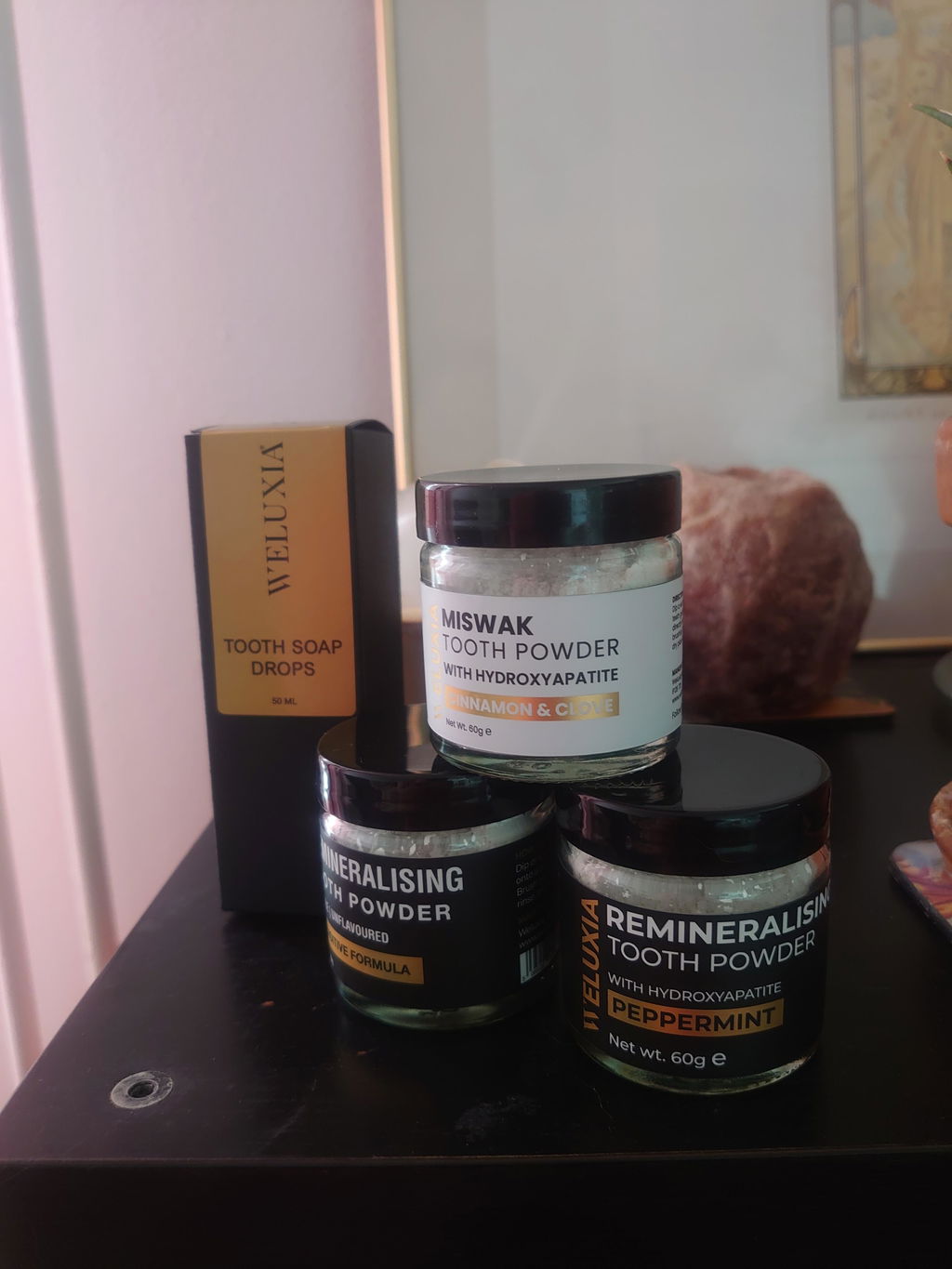
Weluxia's Remineralising Tooth Powder is formulated to meet all of those criteria: clean ingredients, active hydroxyapatite, gentle abrasivity, and a fluoride free formula designed for daily use within a complete natural oral care routine.
Building a Complete Natural Oral Care Routine for Enamel Support
The most effective remineralisation strategy is a layered daily routine rather than a single product approach. Here is a simple framework based on Weluxia's oral care range.
In the morning, begin with oil pulling using Weluxia's Coconut Oil Pulling for 10 to 15 minutes on an empty stomach. Follow immediately with the Copper Tongue Scraper to clear the tongue of any released bacteria and debris. Then brush with the Remineralising Tooth Powder, spit without rinsing, and go about your morning.
In the evening, brush again with the tooth powder after your last meal. Floss thoroughly to remove interdental plaque where most early decay begins. Allow the minerals from the powder to remain in contact with the enamel overnight, when saliva flow is lower and the remineralisation window is valuable.
Consistency with this routine over weeks and months is where the meaningful change happens. Remineralisation is not dramatic or immediate. It is the quiet, steady result of giving your teeth the conditions and materials they need every single day.
Frequently Asked Questions
Does tooth powder work for cavities?
Remineralising tooth powder can support the repair of very early stage enamel demineralisation, before a cavity has structurally formed, by supplying hydroxyapatite, calcium, and other minerals directly to the tooth surface. Once a cavity has progressed into the dentine or pulp, tooth powder cannot reverse the structural damage and professional dental treatment is necessary. Use it as part of a consistent preventive routine rather than as a treatment for existing decay.
Why don't dentists recommend hydroxyapatite?
Most UK dentists were trained during an era when fluoride was the sole evidence backed recommendation for cavity prevention. Hydroxyapatite has 40 years of clinical use in Japan and a growing body of Western research confirming its efficacy, but it takes time for that evidence to shift mainstream dental guidance. More progressive and holistic dentists are increasingly recommending it, particularly for patients who prefer a fluoride free approach, and the science supporting it continues to strengthen.
How can I remineralise a cavity?
True remineralisation applies only to very early, pre structural enamel lesions. To support it, reduce the frequency of acid exposure in your diet, brush twice daily with a hydroxyapatite rich tooth powder, incorporate oil pulling to reduce oral bacteria, and ensure your diet includes adequate calcium, phosphate, and fat soluble vitamins D3 and K2. Consistency over several weeks to months is required before changes are typically noticeable.
Do tooth powders really work?
Well formulated remineralising tooth powders do work, provided expectations are appropriate. Clinical research supports the ability of hydroxyapatite, xylitol, and calcium minerals to strengthen enamel, reduce decay causing bacteria, and support a healthy oral environment. They will not produce the same foamy sensation as conventional SLS toothpastes, but foam is cosmetic rather than functional. The absence of foam has no bearing on cleaning effectiveness. Used daily as part of a complete routine, a quality tooth powder can make a meaningful difference to long term enamel health.
Is remineralising tooth powder safe for daily use?
Yes. Tooth powders formulated with kaolin clay, calcium carbonate, and hydroxyapatite are gentle enough for twice daily use. Look for formulations with a low RDA score and without harsh synthetic abrasives. Avoid powders containing activated charcoal for daily use, as charcoal has a higher abrasivity that can wear enamel over time with repeated use.