Tooth Soap vs Toothpaste: Which Is Better?
By the Weluxia Team · April 2026 · 8 min read
Tooth soap and toothpaste both clean your teeth. Both are applied to a toothbrush and used twice daily. Beyond that, the two products are fundamentally different in how they are made, what they contain, and what they do and do not deliver. This article compares them directly so you can decide which is right for you.
If you are new to tooth soap entirely, start here first: What Is Tooth Soap? A Complete Guide.
What is the difference between tooth soap and toothpaste?
Conventional toothpaste is a manufactured paste containing anywhere from 15 to 30 ingredients. The cleaning work is done by sodium lauryl sulphate (SLS), a synthetic detergent that creates foam, and by mild abrasives such as silica or calcium carbonate that polish the tooth surface. Most conventional toothpastes also contain fluoride, glycerin, humectants, thickeners, artificial flavouring, and preservatives.
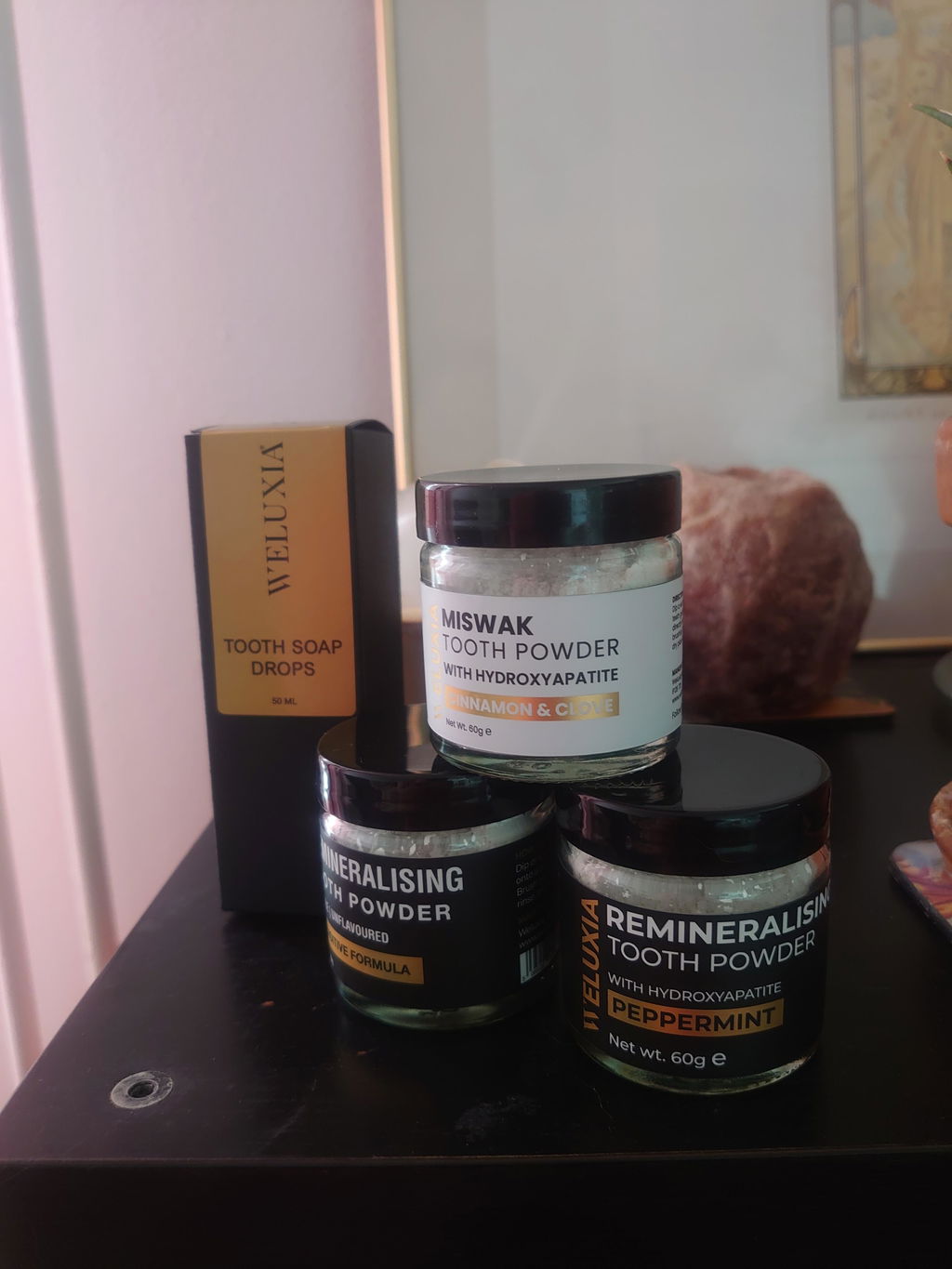
Tooth soap is made by saponifying plant oils — typically olive oil and coconut oil — using potassium hydroxide. This produces a natural soap compound that cleans teeth through the same mechanism as any soap: one end of the molecule attracts water, the other attracts oils and fats, and together they lift residues from the tooth surface and rinse away cleanly. Weluxia Tooth Soap Drops contain four ingredients: saponified olive oil, saponified coconut oil, distilled water, and natural essential oil.
The core difference is this: toothpaste cleans through a combination of synthetic detergents, abrasives, and chemical additives. Tooth soap cleans through the natural chemistry of saponified plant oils alone.
A direct comparison: tooth soap vs toothpaste
Ingredients. Conventional toothpaste typically contains SLS, fluoride, glycerin, artificial flavours, preservatives, and colouring agents. Weluxia Tooth Soap Drops contain four ingredients, all food grade. If a short, transparent ingredient list matters to you, tooth soap wins this comparison outright.
Cleaning action. Both clean effectively for most people in everyday use. Toothpaste uses abrasives and SLS to polish and foam. Tooth soap uses saponified oils to lift debris through surfactant action. Neither is clearly superior for routine daily cleaning — both remove food particles and surface residue when used correctly for two minutes twice daily.
Fluoride. Conventional toothpaste contains fluoride. Tooth soap does not. Fluoride is the most clinically proven ingredient for strengthening enamel and reducing cavity risk. This is the single most significant practical difference between the two products and the most important factor to discuss with your dentist if you are considering a switch. If you have a high cavity risk or active decay, this matters considerably.
SLS and mouth ulcer sensitivity. Toothpaste contains SLS. Tooth soap does not. SLS is the most commonly identified trigger for recurrent mouth ulcers and gum irritation in people with sensitive mouths. Many people who switch to tooth soap report a significant reduction in mouth ulcers within weeks. If SLS sensitivity is your main reason for looking at alternatives, tooth soap is one of the most direct solutions available. Read more in our guide: Tooth Soap for Sensitive Teeth and Gums.
Glycerin. Toothpaste contains glycerin as a humectant and texturising agent. Tooth soap contains none. Some natural oral care practitioners argue glycerin leaves a residue on enamel that may interfere with the mouth's natural remineralisation processes. Tooth soap rinses completely clean.
Remineralisation. Neither conventional toothpaste nor tooth soap remineralises enamel on its own. Fluoride toothpaste supports remineralisation by incorporating into the enamel structure. Tooth soap does not provide this. If remineralisation is a priority, a hydroxyapatite product used alongside tooth soap covers that gap. Weluxia's mineral tooth powder range is designed to complement tooth soap for exactly this reason.
Foam. Toothpaste produces significant foam from SLS. Tooth soap produces little to none. The foam from toothpaste is purely sensory — it does not improve cleaning. Most people adjust within a week.
Packaging and waste. A standard toothpaste tube is plastic and largely unrecyclable. Weluxia Tooth Soap comes in a glass bottle with a precision dropper and generates significantly less waste over the same period of use.
Does brushing your teeth with soap make them whiter?
Not in the way whitening toothpaste claims to. Tooth soap does not contain peroxide, abrasive polishing agents, or optical brighteners — the three mechanisms through which whitening products produce visible results.
What tooth soap can do is remove surface staining more effectively than some gentle toothpastes, because the surfactant action of saponified oils is effective at lifting oily residues, including surface stains from tea, coffee, and food. Many Weluxia customers report that their teeth look cleaner and brighter after switching, though this reflects more thorough surface cleansing rather than active whitening chemistry.
If whitening is your primary goal, tooth soap alone is not the right tool. Paired with an oil pulling routine or a mineral toothpowder, you are more likely to see a gradual visible difference over time.
What can you brush your teeth with instead of toothpaste?
The most practical toothpaste alternatives for daily use are:
Tooth soap. Made from saponified plant oils. Cleans effectively, free from SLS, glycerin, and synthetic additives. The closest like for like replacement for twice daily brushing. This is what Weluxia makes.
Tooth powder. A dry mineral formula, typically containing hydroxyapatite, clays, and essential oils. Slightly more abrasive than tooth soap and better suited to remineralisation support. Weluxia's tooth powder range works well alongside tooth soap for those who want mineral support alongside cleansing.
Hydroxyapatite toothpaste. A fluoride free paste that uses hydroxyapatite — the mineral that makes up enamel — as the active ingredient. Remineralises without fluoride. A good option for those who want something closer to conventional toothpaste but with a cleaner formula.
Baking soda. Effective at neutralising acids and removing some surface stains, but too abrasive for daily use and provides no surfactant cleaning action on its own.
Of these, tooth soap is the most minimal formulation and the most practical for daily twice-a-day use without additional preparation or mixing.
What results can you expect from switching to tooth soap?
Based on consistent feedback from Weluxia customers who have made the switch:
In the first week the main adjustment is sensory — the absence of foam and the subtler flavour of natural essential oil versus synthetic mint. Teeth feel clean but the experience is different to what most people are used to.
By week two to three, most people have adjusted fully. Many report that their mouth feels cleaner between brushes and that the coated feeling they associated with glycerin based toothpaste has gone.
Over weeks and months, people with SLS sensitivity consistently see the most noticeable change: fewer mouth ulcers, less gum irritation, and reduced sensitivity. People without SLS sensitivity generally find the transition smooth with no notable change in dental health either way.
What tooth soap does not do is replace the remineralising function of fluoride or hydroxyapatite. If cavity protection is important to your dental history, factor that into how you structure your routine. Our article Is Tooth Soap Safe? covers this in detail, including who should take extra care before switching.
What is the best soap to brush teeth with?
Not all soaps are suitable for oral use. Regular hand soap, body wash, and bar soap are made for skin — they contain synthetic detergents, fragrances, preservatives, and dyes that are not appropriate to use inside the mouth daily.
A tooth soap formulated for oral use should meet these criteria:
- Made from food grade saponified plant oils — potassium olivate and potassium cocoate are the two most common and most well tolerated
- Free from synthetic detergents, artificial fragrances, parabens, and preservatives
- Flavoured with natural essential oils, not synthetic compounds
- Full INCI ingredient list clearly published
- Sold in a format designed for teeth — liquid drops with a dropper or a bar specifically formulated for oral use
Weluxia Tooth Soap Drops meet all of these criteria. Made in the UK from four food grade ingredients in a glass bottle with a precision dropper. Available in Cinnamon and Mint.
Which should you choose?
Tooth soap is likely the better choice if you experience mouth ulcers or gum irritation with conventional toothpaste, want the shortest possible ingredient list, prefer a vegan and cruelty free product, or want to reduce plastic packaging waste.
Conventional toothpaste or a fluoride alternative is likely the better choice if you have a high cavity risk, active decay, or have been advised by your dentist to use fluoride products. In that case, tooth soap can still be part of your routine but should be paired with a fluoride mouthwash or used in rotation with a fluoride product rather than as a complete standalone replacement.
The two approaches are not mutually exclusive. Many people use tooth soap for their morning brush and a mineral or fluoride product in the evening — getting the benefits of both without compromising on either.
This article is for informational purposes only and does not constitute dental advice. If you have specific oral health concerns, consult your dentist before changing your oral care routine.
Shop: Tooth Soap Drops
Further reading: